
Why Metta Tropical Collective?
A genuinely different future depends far less on the images we create in our minds than on our ability to repair and weave relationships in the present.
About Us
An invitation into the spirit of our work
Metta Tropical begins with a longing to reawaken the heart, soul and spirit of our culture.
To restore our intimacy with all life.
To fall deeply in love with the living world.
To expand our capacity to experience the sacred.
To recover the soulfulness of our participation in reality.
To deepen our attunement to life's beauty, mystery, suffering and truth.
To follow the Eros that draws us towards what life is asking of us.
The dominant paradigm of modernity has given parts of humanity extraordinary knowledge, material prosperity, and technological capacity, while also contributing to the disenchantment and desacralization of life, making dimensions of meaning, belonging, value, and aliveness increasingly difficult to touch. The spiritual dimension of existence has mostly been stolen from our life experience, pushed into the private sphere, or commodified and sold back to us as another form of consumption—to the point where even naming our longing for the sacred can feel embarrassing, naive or out of place. Our inner lives have become harder to inhabit amid the constant pull of outward distraction. Our relationships are more instrumental. Our connection to the living world has grown more distant. And beneath all of this, a widespread crisis of meaning, belonging, and existential orientation has taken root.
This is precisely the dimension of life we are committed to reclaiming at the heart of education and culture.
For us, the spiritual dimension begins in our capacity to become deeply present and attuned to existence, to experience our interbeing with all life, to encounter living beings as intrinsically valuable, to recover a sense of belonging to this earth, to meet suffering with wisdom, compassion and care, to love others with the tenderness we might offer our own child, and to allow this ever greater intimacy with reality to transform how we live.
The sacred, then, is not another realm we must escape into. It is the depth and mystery of life itself—always here, yet becoming more available to us as we learn to perceive, sense, feel, and participate in reality more deeply.
In times of profound rupture, these ways of being in relationship with life become especially important. When inherited stories can no longer orient us, and the structures upon which we have built our lives begin to reveal their limits, deeper existential questions rise to the surface: What is truly worth living for? What does this moment ask of me? What am I willing to give my life to? Where does meaning come from?
Such moments can awaken dimensions of soul and spirit that modernity has often taught us to silence. Our deeper longings can become more clear, revealing not only who we are, but also the grief, love, suffering and callings that live within us—and that may begin to point us toward the unique ways we can serve the flourishing of all life.
It is from this ground of sacredness, soulfulness, and intimacy with life that our work begins. It is what helps us remain present to the grief and rupture of the metacrisis without collapsing or turning away—allowing what might otherwise become numbness, resignation, or despair to be metabolized into deeper responsibility, devotion, and service to the more life-affirming cultures trying to come into being.
Why Metta?
The OrientationAt its heart, Metta, from the Pali language, means a boundless love towards all living beings. For us, it holds three energies embedded in our work:
Loving-kindness
A fierce, boundless and all embracing love towards the liberation and flourishing of all life. It evokes the heart of the Bodhisattva in a time of societal collapse.
Meta-awareness
The capacity to step back, to sense into the deeper patterns shaping our world, systems and crises. Meta as within (interiority), meta as between (relationality), and meta as beyond (different ways of seeing and being).
Metamorphosis
The recognition that these times are demanding us to be transformed, to have our Ego be shape-shifted, to become mature and wise adults in order to fully embody our soul's work.
Metta is the orientation that allows us to face the metacrisis with the kind of wisdom that prevents us from collapsing into despair, simplistic solutions or domination.
Why Tropical?
The TerritoryTropical is an invocation. It calls in the warmth, the pulse, the wild intelligence of life. The eros, aliveness and creative force that lives in Brazil and across the Global South.
It's a call to not be stuck in abstraction, but to return to the body, the land, the rhythm, and the relationships. Tropical honors the wisdom that has long lived in this territory—indigenous, quilombola, Afro-diasporic, and marginalized communities—which despite being ignored, silenced and erased, has endured, holding the keys for how to live through collapse.
To be tropical is to sense from soul,
to be rooted in territory,
to celebrate life,
to follow our eros.
It reminds us that what has survived erasure still holds something essential. And that any honest reckoning with collapse must find its way back to it.
Why Collective?
The CommunityBecause you cannot wake up alone.
Collective names the movement from separation to inter-being, from individualism to interdependence, from a gathering of individuals with shared values to a living field of relationships bound to each other and to something larger than ourselves.
We are evoking the spirit of Sangha. Not a network, but a community of trust, a group of friends who practice together, grieve together, think together, listen together and find — in the space between us — the wisdom none of us carries alone.
This is where we can be truly transformed. Where our ways of seeing, being, knowing and doing are cracked open and rebuilt in deeper alignment with life. Where we remember, slowly, imperfectly and together, how to care, love and support each other.
And as we do so, our trust, intimacy, shared language, vision, and understanding of who we are, where we are, and what is being asked of us begins to strengthen.
So that when things get harder — and they will — we are not starting from scratch. We already know how to move as one body.
It is in times of collapse that small islands of sanity have the capacity to shift the entire system to a higher order.
Who We Must Become
The Bodhisattva Aspiration
Every culture needs images of the human being worth becoming.
Yet at a time asking so much of us, the images we have inherited feel too small for the depth of transformation required.
Our culture can describe the metacrisis in extraordinary detail, and has no shortage of frameworks and list of capacities for what this moment demands of us. What feels far less available is an image of who we must become. One of the most powerful images we know comes from the Buddhist tradition: the bodhisattva — one who awakens to the interdependence and suffering of the world, opens the heart to boundless compassion, and commits their life to the liberation of all living beings.
For the bodhisattva, awakening and service to the world become inseparable. To awaken is to see through the illusion of being a separate self. The suffering of other people, other species, and the living Earth can no longer be treated as something happening somewhere “outside” of us. Spiritual, systemic and social transformation become intertwined, all part of a single response to the suffering of the world.
The bodhisattva trains the heart to become boundless: to meet each being with the tenderness a mother offers her only child, to recognize the irreducible worth of every life, and to expand their love and compassion to ever wider circles of living beings. Again and again, they enter the places of pain, confusion, and separation to understand it more deeply, and find ways to wisely respond to it.
Why does such an aspiration matter? Because we grow to the height of what we can imagine becoming. Humanity is nowhere near the fullness of its individual and collective potential. And without an image that reaches that far, we not only forsake our most sacred capacity of becoming, but of the more beautiful world wanting to be born.
We are not claiming the image of the Bodhisattva, though it has shaped everything we are attempting. We are saying that our culture offers nothing of that height to grow toward. And a culture that cannot imagine such a being will rarely build the containers, practices, communities and developmental pathways capable of cultivating them.
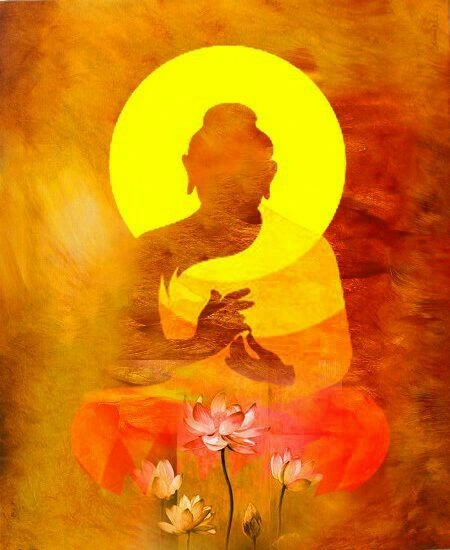
This is not a small thing missing from our times. It is close to the heart of what has gone wrong — and it is part of what our work exists to restore.
If we are to participate meaningfully in a deeper civilizational transition, we believe our time will require contemporary expressions of the Bodhisattva aspiration — and new pathways of formation capable of supporting people to grow toward them. Spaces where the sacred potential of each human being can be recognized and cultivated, and where the qualities of heart, mind, and soul this moment asks of us can mature through practice, relationship, responsibility, and service to the whole.
We walk on the footsteps of others who have also sensed the need for images of human possibility adequate to the demands of their time — whether they call it Bodhisattva, EcoSattva, the New Saints, Spiritual Warriors or Homo Amor. What they share is an intuition that the crises before us cannot be met with systemic change alone. They also ask for deeper forms of human aspiration, formation and maturation, capable of helping us become Bodhisattvas for our time.
Our Vows
The work before us is larger than any person, institution, or generation can complete. What we long for will not arrive through strategy or good intentions alone. It asks for devotion — for something we are willing to give our lives to, knowing we will not see it finished.
We see vows not as promises, nor as rules. They serve as an orientation. These vows are a small, but essential part of this work. A way of reminding ourselves, again and again, what we are here for.
The Soul Vows
Living beings are numberless,
I vow to serve them.
Delusions of separation without limit,
I vow to transform them.
Gates of truth and love are immeasurable,
I vow to enter them.
The path of awakening and healing is unsurpassable,
I vow to embody it.
The Earth Vows
The roots of the metacrisis are interconnected,
I vow to understand them.
Delusions of capitalist modernity are inexhaustible,
I vow to transform them.
Life-affirming futures are boundless,
I vow to perceive, create and amplify them.
Planetary flourishing is not inevitable,
I vow to offer my life to it.
These vows are inspired by the four great bodhisattva vows of the Buddhist traditions, and by the postcapitalist vows articulated by Alnoor Ladha and Lynn Murphy. We offer ours as part of our own surrender to what this moment is asking of us.