A golden chrysalis hanging from a twig

TransformativeEducational Lab

A Note on the Nature of This Work

What follows is an evolving educational inquiry that is still finding its form, taking root, and being tested. It is not a finished educational model or pedagogy. Much of it has been explored first through our own lives, relationships, communities, and attempts to navigate a time of profound uncertainty and complexity without collapsing into overwhelm, simplistic answers, or resignation. This work has not emerged primarily within academic institutions, but through our own lives as a living curriculum. At the same time, it is deeply influenced by many lineages, traditions, educators, practices, and bodies of work that we have engaged with over decades.

What is experimental here is not only the particular way we are bringing different lineages into relationship with each other, nor the fact that it is grounded in Brazilian soil, but the educational architecture and pedagogy through which we engage with these lineages in response to the conditions of this moment. We created this collective because we could not find many spaces wrestling with the questions we are holding in quite this way and, as educators, wanted to create a container in which these ideas and practices could be lived, tested, challenged, and refined.

We offer what follows with humility, as a picture of where our thinking and practice stand at this moment, knowing that both will continue to evolve as the work unfolds. This work will continue to change through practice, feedback, failure, consequence, and the people who enter into relationship with it. What remains is the commitment and devotion to continue discovering what kind of education can prepare us to navigate and respond to this time between worlds.

Metta Tropical Collective

Wisdom-Centered Education in a Time Between Worlds

Every educational architecture begins, explicitly or not, with a diagnosis of the world it is preparing people to inhabit. Our work begins from the premise that we are living through a metacrisis and a period of profound systemic breakdown. If the underlying foundations of our civilization remain unchanged, we believe the risks of ecological collapse, social fragmentation, authoritarianism, technological harm, and existential catastrophe will continue to grow.

We understand this predicament, in part, as a crisis of wisdom. Humanity's knowledge and technological power have expanded faster than our maturity to discern what matters, navigate complexity, understand consequences, care for the larger whole, and wield that power in service of life. At the same time, many of the ways of perceiving, valuing, relating, and organizing that helped produce our current crises continue to live through our institutions, cultures, desires, and everyday lives.

Our work therefore revolves around two questions:

  1. 1.

    Who must we become to navigate and respond wisely to these times?

  2. 2.

    What kinds of educational environments can support such becoming in a time of metacrisis and civilizational transition?

We sometimes describe this inquiry as “education for the end of the world as we know it”—not the end of humanity or life, but the possible unraveling of a civilizational order increasingly unable to sustain the conditions upon which it depends. From this perspective, education cannot simply prepare people to adapt to or succeed within the world as it is. It must help us question its underlying foundations, hospice what can no longer continue, discern what must be carried forward, navigate what is breaking down, and participate wisely in what comes next.

The Knowing–Becoming–Doing Gap:Knowing something is not the same as being transformed by what we know.

We already have unprecedented access to knowledge about ecological breakdown, inequality, systemic risk, technological disruption, and many of the forces generating the metacrisis. Still, our societies—and often our own lives—continue to be organized around many of the same desires, habits, incentives, relationships, and assumptions that reproduce these conditions.

We call this the knowing–becoming–doing gap: the distance between what we know, who we become because of that knowing, and how it ultimately shapes the way we live.

Knowing

What we know

Unprecedented access to knowledge about ecological breakdown, inequality, systemic risk, and technological disruption.

Becoming

Who we become because of it

Deeper shifts in how we perceive reality, what we value, and how we relate to one another, the living world, and the sacred.

Doing

How it shapes the way we live

The desires, habits, incentives, relationships, and choices through which our lives are actually organized.

For us, this is one of the central educational challenges of our time. It is also why our work is oriented toward Wisdom-Centered Education: forms of education concerned not only with introducing different ways of knowing, but capable of supporting deeper shifts in how we perceive reality, what we value, how we relate to one another, the living world, and the sacred, and how we participate in life. The aim is to help create the conditions for whatever comes next to emerge not from the same patterns of thought, relationship, and organization that brought us here, but from a deeper ground of wisdom, love, compassion, and responsibility toward all life.

What is the Transformative Educational Lab?

This is the space within Metta Tropical Collective where we research, prototype, and practice new forms of education capable of supporting individual and collective transformation in a time of metacrisis.

We are interested not simply in what people learn, but in the conditions that can reshape how we perceive reality, relate to life, and participate in the world—from fragmentation and separation toward greater intimacy, interdependence, and responsibility—so that more life-enhancing communities, systems, and cultures can become possible.

At the heart of our work is what we call Wisdom-Centered Educational Architectures: ecologies of transformation integrating structures, practices, relationships, experiences, developmental pathways, and pedagogies designed to support deeper shifts in how individuals and collectives relate to self, other, world, and the sacred, while cultivating the capacities needed to navigate and respond to the metacrisis.

Wisdom-Centered Educational Architecture

We understand this moment as a civilizational rite of passage: an old world is becoming increasingly unable to sustain itself, while what might come next has not yet fully emerged.

Our work emerges as a response to that. Such thresholds require social and educational containers capable of supporting people through profound periods of transition. Most educational experiences are designed as bounded programs—a course, workshop, retreat, fellowship, or degree. These can be powerful, but the depth of formation required at this moment asks for something more enduring and communal.

Our inquiry therefore extends beyond designing transformative programs. We are interested in educational architectures capable of holding long arcs of human becoming—ecologies strong enough to accompany people through different stages of life while deepening their capacity to navigate and respond wisely to a time between worlds. Courses, retreats, fellowships, and trainings may belong within this architecture, but they are not ends in themselves.

Wisdom-Centered Educational Architecture is our name for such an ecology of transformation: an intentional constellation of environments, relationships, practices, rituals, trainings, and forms of support designed to hold human transformation with the depth, care, and responsibility that a civilizational rite of passage demands.

From our work so far, we understand this architecture as comprising five interconnected elements:

Aspiration

The horizon of human possibility that calls and orients transformation

Every transformative path is shaped by the horizon toward which it is oriented. Human beings grow not only through what they learn, but through the possibilities of who they are invited to become. At a time asking so much of humanity, many of the dominant images available to us of who we might become feel too narrow for the depth of maturation this moment requires.

Our aspirational work therefore begins with two questions: Who must we become to meet this moment with wisdom, maturity, and responsibility? And how must our relationships and capacities transform so that our becoming can be placed in service of the flourishing of all life?

At the heart of this becoming is a transformation in how we relate to life. We seek to become more capable of noticing how our perceptions, desires, habits, and ways of making sense have been trained within modernity's patterns of separability, extraction, and control—and of cultivating ways of relating grounded more deeply in interbeing, intrinsic value, reverence, and responsibility toward life.

We do not see this as an attempt to define an ideal human being. Rather, we are trying to contribute to a richer social imaginary of human possibility—one in which our growth is not primarily for ourselves, but enables us to love more deeply, perceive more clearly, take greater responsibility, and place our lives in service of the larger whole. In doing so, we hope to move through this transition without reproducing in new communities and systems the same relational patterns that brought us here.

For us, this involves four fundamental shifts in our relationship with life, alongside the capacities that can help these shifts become increasingly embodied:

Self

From Fragmentation → Toward Wholeness

Remembering who we are beneath and within our conditioning, while learning to meet the wounds, attachments, desires, entitlements, and many parts of ourselves with loving presence and compassion—becoming less governed by fear, protective patterns, and control, and more able to live from a deeper ground of wholeness.

Explore capacities →

Self

Capacities we cultivate

Self-Awareness · Presence · Self-Inquiry · Self-Compassion · Emotional Maturity · Attunement · Embodied Awareness · Affective Stamina · Grief

Other

From Separation → Toward Interbeing

Reawakening to our interdependence and entanglement with human and more-than-human beings, recognizing their intrinsic worth, and cultivating relationships of intimacy, reciprocity, repair, and genuine care for one another's flourishing despite our differences.

Explore capacities →

Other

Capacities we cultivate

Attunement · Compassion · Intimacy · Loving Speech · Deep Listening · Understanding · Relational Accountability · Repair · Holding Differences

World

From Observation → Toward Participation

Remembering that we do not stand outside the worlds we seek to understand. We are participants in a living, interdependent world, shaping and being shaped by the social, ecological, and historical systems we inhabit. We cultivate the capacity to perceive these entanglements, recognize the limits of our position, and act with greater responsibility for the consequences of our participation.

Explore capacities →

World

Capacities we cultivate

Systems & Complexity Thinking · Economic Literacy · Historical Consciousness · Ecological Awareness · Sensemaking · Critical Thinking · Intellectual Humility · Holding Paradoxes

The Sacred

From Disenchantment → Toward Reverence

Recovering our belonging within a reality that exceeds our full comprehension, encountering life as intrinsically valuable, sacred, and worthy of reverence. Cultivating an embodied sense of love, devotion, and responsibility towards the whole, while recognizing ourselves as unique expressions of it.

Explore capacities →

The Sacred

Capacities we cultivate

Contemplative Depth · Value Perception · Meaning-making · Ethical Discernment · Devotion · Truthfulness · Imagination · Visceral Responsibility · Reverence

This shift matters because the predicament we face is not only systemic, but also ontological, relational, and affective. Responding wisely will require much more than analytical or systemic capacity. It will ask us to meet wounds with loving presence, stay with uncertainty without collapsing into simplistic answers, recognize complicity without dissolving into shame, remain open to disorientation, draw on multiple forms of intelligence, hold difference with care, attune to what is true, good, and beautiful, sense what is alive and trying to emerge, and take responsibility for what is ours to do in this moment.

Structures

The conditions that hold transformation over time

The depth of transformation civilization must go through at this moment cannot be held by many of the same structures that have helped produce the crisis we face. We need containers capable of supporting human formation across decades and lifetimes, grounded in different ways of perceiving, relating, and responding to the world.

Part of what these containers offer is another rhythm of life. Much of the wisdom we need may already be trying to reach us, but our lives often move too quickly for us to hear it. A practice slows us down. A ritual slows us down. A mentor slows us down. A story slows us down. A community slows us down. They create the conditions to look more deeply within ourselves, listen more carefully to the world, and discern what this moment may actually be asking of us.

We are therefore exploring what ecologies of transformation might look like at this time: robust, interconnected constellations of relationships, practices, structures, and conditions that create fertile ground for deep human transformation in service of the flourishing of all life.

At this stage of our inquiry, we see these elements as foundational:

Ontology

Understanding Reality

Every culture rests upon an understanding of reality. We explore ways of perceiving that restore interdependence, intrinsic value, reverence, and belonging within the web of life.

Stories & Myth

Shared Narrative

We grow through the images of possibility available to us. Shared narratives expand our imagination of who we might become and the futures we might bring into being.

Ecology of Practice

Embodying What We Know

Knowing alone does not transform us. Contemplative, relational, somatic, artistic, and ecological practices turn what we know into embodied ways of perceiving and relating.

Ecology of Training

Immersive Experiences

Transformation requires immersion and continuity. Retreats, residencies, fellowships, and courses create containers for deeper insight, integration, and growth.

Community & Friendship

Accompanying Each Other

Transformation does not happen alone. In the spirit of the sangha, we cultivate true friendship grounded in shared practice, mutual care, and accompaniment through change.

Ancestrality

Intergenerational Guidance

Elders, mentors, wisdom keepers, and lineage holders help hold the space for deeper surrender and depth in our explorations.

Ethics

Relational Orientation

Not rigid moralism, but principles that align our lives toward greater integrity, reciprocity, responsibility, care, and service to life.

Ritual

Deepening Shared Meaning

Ritual marks thresholds of transformation, creating shared meaning, strengthening belonging, and reconnecting us with what is larger than ourselves.

Renunciation

Voluntary Simplicity

Loosens our dependence on habits, comforts, desires, identities, and ways of living that no longer serve life, while cultivating greater simplicity, sufficiency, and discernment about what truly matters.

Streams

Domains of reality we are learning to understand and participate in more deeply

Within our Educational Architecture, we engage five interconnected streams of transformation—The Sacred, Soul, Systems, Soil, and Society. We understand them as foundational domains of reality and human life that can help us navigate and respond to the metacrisis with greater depth, wisdom, and responsibility.

We see this as a transdisciplinary approach to understanding and responding to our times. The complexity of our predicament requires us to wrestle with what is ultimately valuable, what it means to be human, the systems shaping our world, the histories that brought us here, our belonging within the living Earth, and how we organize and act together in society. These streams are interdependent fields of inquiry and formation that together cultivate a more integrated understanding of our predicament and a greater capacity to respond without causing more harm.

The Sacred

The Sacred

Remembering What Ultimately Matters

The Sacred explores the nature of reality, intrinsic value, truth, meaning, and what is ultimately worthy of our devotion. Drawing from spiritual and wisdom traditions, philosophy, and theology, it helps restore our capacity to encounter life as interdependent, meaningful, and worthy of reverence.

It is not only one stream among others, but the orienting horizon of the whole architecture.

Soul

Soul

Remembering Who We Are

Soul attends to the psychological, emotional, relational, embodied, and spiritual work of becoming more whole. It explores who we are beneath our conditioning, and how our wounds, desires, identities, and protective patterns shape the way we meet the world.

We attend not only to our inner lives, but also to the spaces between us—how we listen, attune, communicate, build intimacy, and meet one another more fully.

This stream cultivates the maturity and relational capacities needed to participate in the world without reproducing the patterns we seek to transform.

Systems

Systems

Remembering Where We Are

This stream cultivates the capacity to perceive patterns beneath events, trace the historical and structural roots of the metacrisis, and understand the cultural, political, technological, economic, and ecological forces shaping our world.

We investigate how dominant worldviews, colonial histories, institutions, incentives, and economic systems shape not only society, but also our desires, identities, relationships, and imagination. Drawing from systems thinking, complexity, political economy, decolonial thought, and civilizational inquiry,

we seek to respond to our predicament without collapsing into reductionism or simplistic solutions.

Soil

Soil

Remembering Our Place in the Web of Life

Soil seeks to restore our relationship with land, place, ancestry, and the more-than-human world. This stream draws from Indigenous and Quilombola wisdom, agroecology, land-based movements, bioregional thought, nature-based practice, and communities across Latin America that have sustained and regenerated life-giving relationships despite centuries of dispossession and erasure.

Through engagement with different ways of knowing and living, we are invited into deeper intimacy with the Earth and the wider community of life—relationships grounded in interdependence, kinship, reciprocity, and belonging.

Society

Society

Remembering How to Respond to This Moment

Society seeks to translate knowing and insight into transformative action. This stream brings us into direct contact with people, communities, movements, and initiatives at the living edge of cultural and societal renewal—those experimenting with how to organize their lives and work in response to the metacrisis.

Through these encounters, we explore movement-building, community organizing, institution-building, peacebuilding, ethical uses of power, and the many ways people have responded to moments of profound historical rupture.

Together, these five streams become portals for deepening our relationship with dimensions of reality we consider important at this moment, helping us understand more fully what matters, who we are, where we are, what we belong to, and how we might respond to these times.

Ongoing research

Within our collective, we continuously map, research, and engage with the global and local thinkers, practices, organizations, trainings, and movements working at the leading edge of these five dimensions—not only seeking to integrate them into our Wisdom-Centered Educational Architecture as an offer to our community, but also adapting them, when needed, into forms that are culturally grounded and accessible within our context.

Pedagogy

How we perceive and relate to reality shapes what reality becomes available to us.

The structures and streams of transformation create the conditions and domains through which transformation can unfold. Our pedagogy asks a different question: How must we engage with reality for what we encounter to actually transform how we perceive, relate, sense and live in service of all life?

Modern education has largely trained us to encounter the world through abstraction, analysis, and conceptual knowledge. We have developed an extraordinary intellectual understanding of ecological breakdown, technological risk, systemic incentives, and the metacrisis, while continuing to organize our lives around many of the same desires, habits, relationships, and definitions of success that reproduce them. These capacities remain essential, but they are insufficient for meeting the complexity of our times, and even more insufficient for the deeper transformation this moment demands.

Relational Ontological Pedagogy

Our pedagogy seeks to expand the ways through which we can perceive, relate, sense and participate in reality more soulfully by restoring and deepening our sense of sacredness, meaningfulness and intrinsic value of life in a culture that has often flattened these dimensions of experience.

We cultivate the capacities to perceive and meet reality with more of our whole being—mind, heart, body, imagination, relationality, intellect and contemplative depth—gradually becoming more sensitive instruments of perception, capable of greater intimacy, attunement, and presence to the beauty, truth, goodness, grief, and suffering of the world. As practitioners deepen these relational capacities, they become more capable of being with the complexity of our times without collapsing into overwhelm, simplistic answers, nihilism, or separation, while cultivating the discernment to act with greater wisdom, care, and responsibility toward the whole.

Relational Ontological Pedagogy therefore is a participatory approach to education concerned not only with what we know, but with what becomes perceptible to us, how deeply we enter into relationship with what we perceive, how we learn to sense together, and how what we encounter transforms the way we participate in life.

It unfolds through four recurring movements

Ontological

Refine Perception

What kind of realities become visible through the way we learn to perceive?

We seek to cultivate forms of perception, ways of looking at the world, that make us more sensitive to fundamental dimensions of reality which modernity has often dismissed: interdependence, intrinsic value, suffering, eros, meaning, sacredness, beauty, and the transcendental worth of a life.

Read more

Here, we work with different Eyes of Perception, recognizing that no single mode of perception can disclose the fullness of reality. The main orientation we have is to move:

From ways of perceiving that disclose reality as

Objects, resources, meaningless and separate from us.

Towards ways of perceiving that see reality as

Full of value, meaning, sacredness, intrinsic worth, and interdependence.

The aspiration is to cultivate ways of looking at the world that can consistently reduce suffering, craving and greed, while enhancing beauty, soulfulness and sacredness.

Relational

Deepen Participation

How deeply can we enter into relationship with what we perceive?

Perceiving something does not necessarily mean being deeply in relationship with it. We therefore cultivate and practice multiple depths and modes of relating to life—each offering a different way of coming into contact with reality.

Read more

Consider a forest

We might begin by perceiving its intrinsic value and sacredness. From there, we can relate to it through many depths:

  • Conceptual

    Thinking about the mycelial networks connecting its trees.

  • Narrative

    Remembering a personal story that carries meaning for us.

  • Interior

    Feeling the grief that arises as forests are destroyed.

  • Relational

    Attuning to a tree and listening for what it has to tell us.

  • Embodied

    Sensing how our body changes in its presence.

  • Imaginal

    Engaging the forest through image, symbol, and imagination.

  • Transpersonal

    Experiencing belonging within a larger living whole.

These depths of participation do not form a simple hierarchy from shallow to deep. Each has its own value and can disclose something the others cannot. The aspiration is to cultivate greater range, intimacy, and fluidity across them, expanding the kinds of information, experience, and relationship available to our discernment.

As our relationship with reality deepens, different aspects of it can become available to us: experiential knowledge, embodied knowing, relational information, warm data, imagination, and insight that conceptual analysis alone cannot provide. These do not automatically lead to wiser conclusions; they enlarge the field from which discernment becomes possible.

Wisdom, in this sense, involves learning to move among these different depths without reducing reality to any one of them.

Explore the Relational Depths Table →
Collective

Sense From the Whole

What becomes possible when knowing is no longer located only within the individual?

We work with collective sensemaking in two complementary ways: through the quality of our relationships and the structures through which we participate together. As both deepen, the community itself can begin to function as a soulful organ of perception—capable of sensing beauty, sacredness, meaning, tensions, needs, and emerging possibilities that no individual perspective or practice could perceive alone.

Read more
Through the quality of our relationships

Relational co-sensing

As our individual capacities for presence, attunement, and relational depth develop collectively, we learn to sense not only from ourselves or toward one another, but from the relational field emerging between us—allowing forms of knowing to become perceptible that no individual may have been able to access alone.

Through the structures we share

Infrastructures for emergence

Assemblies, rituals, shared responsibility, collective work, governance practices, decision-making processes, dance, music, food, fire tending and other forms through which a community continually senses itself in relation to a place, metabolize experience, remember together, and orient itself towards a shared image for a collective future. These practices do not necessarily require profound relational depth to function, but they can enable forms of collective intelligence that exceed individual perception.

Transformational

Embody What We Know

How does what we perceive, relate with, and encounter become a way of life?

Everything described above remains incomplete if it does not eventually transform how we live, what we commit ourselves to, and how we participate in service of the flourishing of life. Our aspiration is not simply to build coherence within our communities or generate insights that remain contained within educational spaces, but to be resourced by these relationships so we can participate in the world with greater wisdom, courage, and responsibility.

Read more

Transformation deepens through participation in life—through relationships, work, experimentation, creation, service, organizing, activism, the exercise of power, the stewardship of resources, and the concrete choices of everyday life.

The world itself becomes an essential part of the pedagogy. As our aspirations encounter complexity, resistance, contradiction, and consequence, we discover what has actually become embodied within us and what remains merely understood. Participation is not simply the application of what we have learned; it becomes another source of learning and transformation.

Our actions inevitably affect the people, communities, systems, and ecologies we participate in. Attending to what happens as a consequence can refine our perception, deepen our relationships, challenge our assumptions, and reveal where further transformation is required—beginning another cycle of inquiry, participation, and practice.

Orientation

What transformation is ultimately in service of

Transformation is not inherently good. We can become more intelligent, capable, self-aware, relationally skilled, or influential while remaining organized around separation, extraction, and self-interest. This is why we are concerned not only with whether transformation happens, but with what it is in service of.

Our work is oriented toward a more soulful, intimate, and loving relationship with all life—one that deepens our sensitivity to the sacredness, intrinsic value, suffering, grief, and beauty of reality. But our aspiration does not end there. We are interested in how these qualities of relationship can cultivate greater trust, coherence, discernment, shared orientation, and collective wisdom across an ecosystem of people and communities, enabling forms of coordination in response to the metacrisis that would be unlikely to emerge from isolated individuals or fragmented institutions alone.

If you still believe in love, you can build unbreakable bonds between people and very, very high levels of trust — and therefore forms of coordination and organization that can actually outcompete forms of organization based on mere contract and transactionality.

— Zak Stein
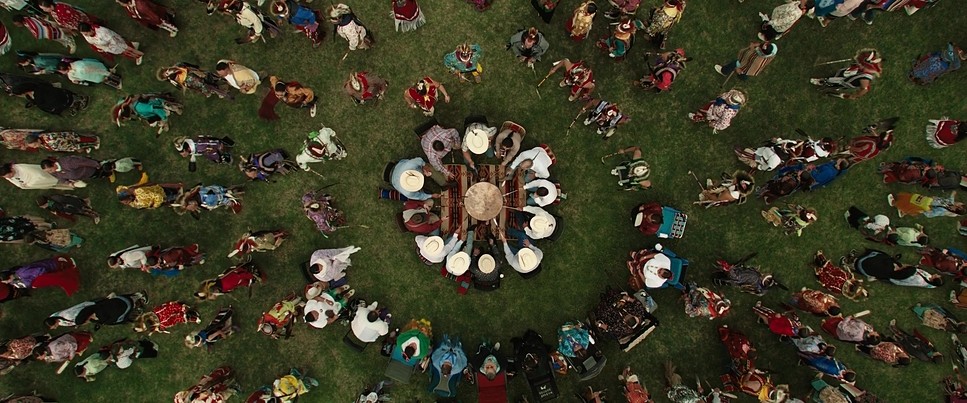
Aerial view of people gathered in concentric circles around a central drum

Past Educational Experiments

Immersive retreat·August 17–24, 2025

Leading in The Metacrisis

Making Sanctuary in a Time Between Worlds

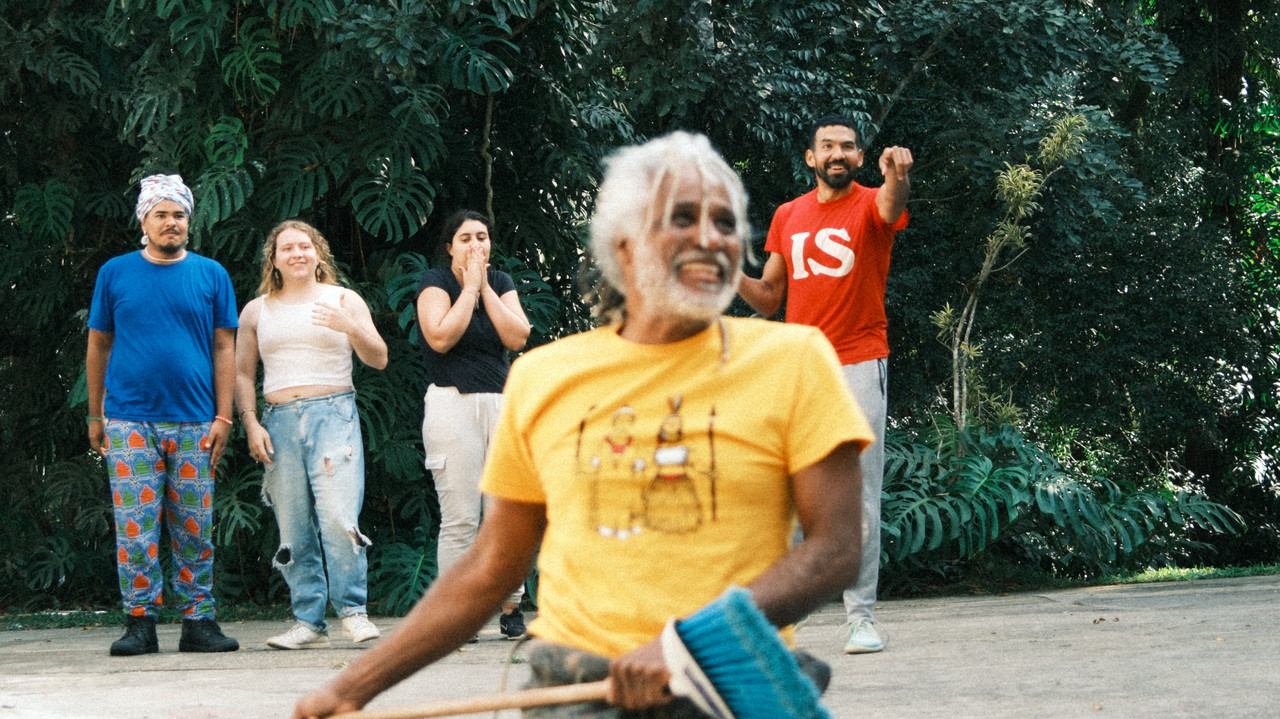
An immersive retreat with 20 Brazilian young leaders from around the country, exploring how we might navigate the metacrisis with greater wisdom, relational depth, and responsibility. Through contemplative practice, systems inquiry, relational work, community visits, and collective reflection, participants engaged with questions of meaning, belonging, crisis, and what it means to respond to a time of profound civilizational transition.

Watch the retreat film ↗
Eight-week training·October 15 – December 10, 2025

Compassion In Collapsing Times

Meeting the suffering of the world with wisdom

A training focused on compassion and meditation practice for the emotional, spiritual, and ethical realities of systemic breakdown and the metacrisis. The program explored how compassion can become a resource for staying present with grief, fear, overwhelm, and suffering while strengthening our capacity to care for ourselves, one another, and the wider world without collapsing into overwhelm, resignation, or disengagement.

Learn about the training ↗

Ready to explore our educational architecture?

Discover how our theory of change guides this experimental work or explore joining our fellowship.

Built with v0